
Cookeville City Directory Shelf
The verified Cookeville city directory shelf is a focused, physical collection rather than a single online database. A Tennessee State Library and Archives inventory, reproduced by the Middle Tennessee Genealogical Society, identifies call number F444.C66A and six Cookeville editions. Those Cookeville years create firm checkpoints for a Cookeville family search through the middle of the twentieth century. The accessible inventory does not show a masthead or publisher, so the volumes should not be assigned to a publisher without a catalog record or a look at the book itself.
Use the Cookeville shelf years as dated snapshots. A name that changes Cookeville address between two editions gives a range to test in deeds, newspapers, and census work. A missing name is less conclusive because directories are selective and their publication schedule was irregular. The local scan and a verified reverse-section run were not located online, so a Cookeville reference request or in-person inspection remains the careful route for address-order research.
| Collection | Verified years | Where held | Access route |
|---|---|---|---|
| Cookeville city directories, F444.C66A | 1950, 1959, 1961, 1964, 1966, 1967 | Tennessee State Library and Archives inventory, Nashville | Ask TSLA or library reference staff; publisher not verified |
| Cookeville and Putnam newspapers | 1889 to current across documented runs | TSLA, Tennessee Tech Library, and Herald-Citizen holdings | Check the Cookeville holding institution for the needed date |
| Cookeville Oracle and Tennessee Tech yearbooks | Oracle digitized 1924 to 1931; yearbook collections online | Tennessee Tech Digital Collections | Free Cookeville digital collection search |
| Putnam court and estate material for Cookeville | 1842 to 1955 in the documented collection | FamilySearch digitization from TSLA | Browseable online images |
Each Cookeville source has a different purpose. The directory gives a printed name-and-address snapshot, while newspapers may supply an event or notice and court images can add relatives, witnesses, or estate roles. The shelf itself is the best starting point when the goal is to establish whether a person or address appears in one of the verified Cookeville years.
Cookeville Directories at Local Research Desks
The Putnam County Library branch at 50 East Broad is the practical Cookeville gateway for a historical search. Its services include FamilySearch access on library Wi-Fi, Ancestry Library Edition, Tennessee Electronic Library, NewsBank, computers, and copying or printing. The library does not publish a full online list for every Cookeville directory, telephone book, obituary reel, or house-history file. A request should name the material needed rather than assume a generic local-history search will cover it.
Ask separately about Cookeville directory volumes, reverse or criss-cross directories, telephone books, Herald-Citizen microfilm, obituary indexes, local-history files, yearbooks, and house-history materials. The library's research-assistance route is useful when a Cookeville shelf or reel must be confirmed before a visit. Older county records may also require a request to the Putnam County Archives, whose online catalog does not describe every item.
The Putnam County Library offers the local databases and reference path shown here.

Use the library first to verify what survives locally, then carry the directory year, surname variants, and street spelling into the archive or state-library request.
Cookeville Directory Dates and Publisher Gaps
The known Cookeville shelf dates are 1950, 1959, 1961, 1964, 1966, and 1967. They do not prove the first Cookeville directory year, the last printed year, or a continuous annual series. They also do not identify the publisher in the accessible inventory. That limit matters because a publisher name, an abbreviation key, and address-order pages belong to a particular volume, not to every directory that might have been printed for the city.
Keep the Cookeville gaps visible in research notes. The years between books can be filled with period newspapers, deeds, permits, and later Cookeville property records, but they should not be treated as missing directory evidence. A dated entry is a snapshot, not proof that every member of a household was listed or that the household remained there after publication.
- 1950: the first verified Cookeville shelf year in the accessible inventory.
- 1959 to 1967: the other verified mid-century editions, with 1961, 1964, and 1966 between them.
- After the shelf years: use newspaper, archive, and property sources until another confirmed volume is found.
Note: The verified inventory is stronger evidence than an assumed publisher or an unconfirmed annual run.
Reading a Cookeville Directory Entry
No publicly viewable Cookeville page from the listed shelf volumes was located. The field model below therefore follows the Library of Congress guide to city directories, not an uninspected local page. Depending on the year and publisher, an entry may arrange people alphabetically and add an address, spouse reference, occupation, telephone number, status mark, widow notation, or abbreviated terms. Treat each detail as something to confirm in the actual volume.
Photograph or transcribe the volume's abbreviation key before interpreting short marks. Search the surname with initials, spouse names, and alternate spellings. A street entry can support an address lead, but it should be checked against the edition date and another source before being used to identify a particular household.
| Name line | Usually the alphabetized person or household lead, with initials or a spouse reference in some editions. |
|---|---|
| Address line | The printed house number and street form used for that edition. |
| Occupation line | A work description may appear, depending on the publisher and year. |
| Telephone or status mark | Possible supporting detail that must be read with the volume's own key. |
| Widow notation | A possible family-history clue, never a substitute for a vital or obituary record. |
- Criss-cross directory
- An address-order section, when a volume includes one, that can move research from a street number back to printed names.
- Householder index
- An index focused on household leads rather than a complete account of every person at an address.
- Abbreviation key
- The publisher's explanation of shorthand terms and symbols, which should be read before interpreting an entry.
Cookeville Directories Beside the Census
Pair a printed address lead with the federal census instead of treating either source as complete on its own. The 1950 Census search accepts state, county, city, name, and enumeration-district searches. National Archives material is public through 1950; schedules from 1960 forward remain closed under the 72-year rule. That makes the verified directory years especially useful between the available census decades.
Cookeville's official historical table records 3,728 people in 1930, 4,864 in 1940, and 6,894 in 1950. Those city totals are context, not an address list. Census boundaries and directory street forms can differ, so compare the enumeration-district description, the city or county setting, and the date on each record before joining entries.
Match the dates. A directory edition, a census enumeration, and a recorded deed describe different moments. Keep each date beside the name or address it supports.
Note: A shared surname is only a lead until the dates, address details, and record roles agree.
Cookeville Directory Companions at Tennessee Tech
Tennessee Tech Digital Collections adds a local layer that a printed directory cannot provide by itself. The digital collections include the Oracle newspaper from 1924 to 1931, The Eagle and Tech Dynamo yearbooks, Tennessee Polytechnic Institute material, oral histories, and the Harding Studios photographs. These sources can supply a spelling variant, a school or organization reference, or a street and place context that helps test a directory lead.
The Harding Studios collection covers roughly 1911 to 1974 and contains about 500,000 photographs of Cookeville people, businesses, schools, and activities. A caption or date can point to a newspaper search or a court-book role, but a photograph should not be treated as a full list of people at a location. For archival questions, Volpe Library Archives is the institutional contact identified in the research.
The Tennessee Tech Digital Collections provide the newspaper, yearbook, and photograph layer illustrated here.
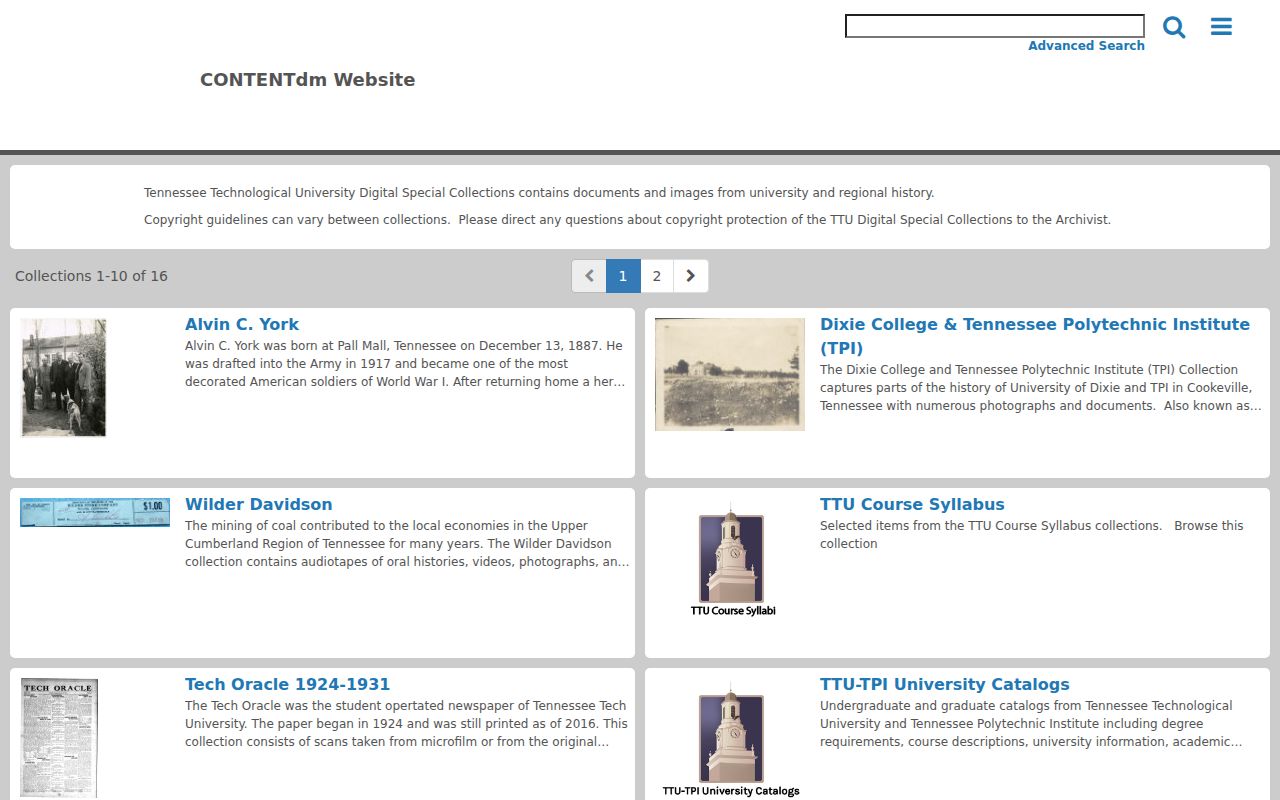
Use a digitized caption or yearbook reference to refine a name search, then return to the dated directory volume or another official record for confirmation.
Cookeville Directory Images and Newspapers
Cookeville's older research trail is distributed across media. The documented newspaper network begins with the Cookeville Press in 1889, continues through the Putnam County Herald, and includes later Citizen and Herald-Citizen runs. Alongside it, the Harding Studios images offer a visual record from roughly 1911 to 1974. That combination can reveal an event, a street form, or a name variation that is absent from a directory listing.
The Cookeville History Museum is another local-history custodian for artifacts, photographs, memorabilia, and a community timeline. Its collections help place a dated record in local context. Captions and exhibits are leads to verify with the collection holder, newspaper issue, or archive record rather than a substitute for them.
The Cookeville History Museum preserves local collections and a community timeline.
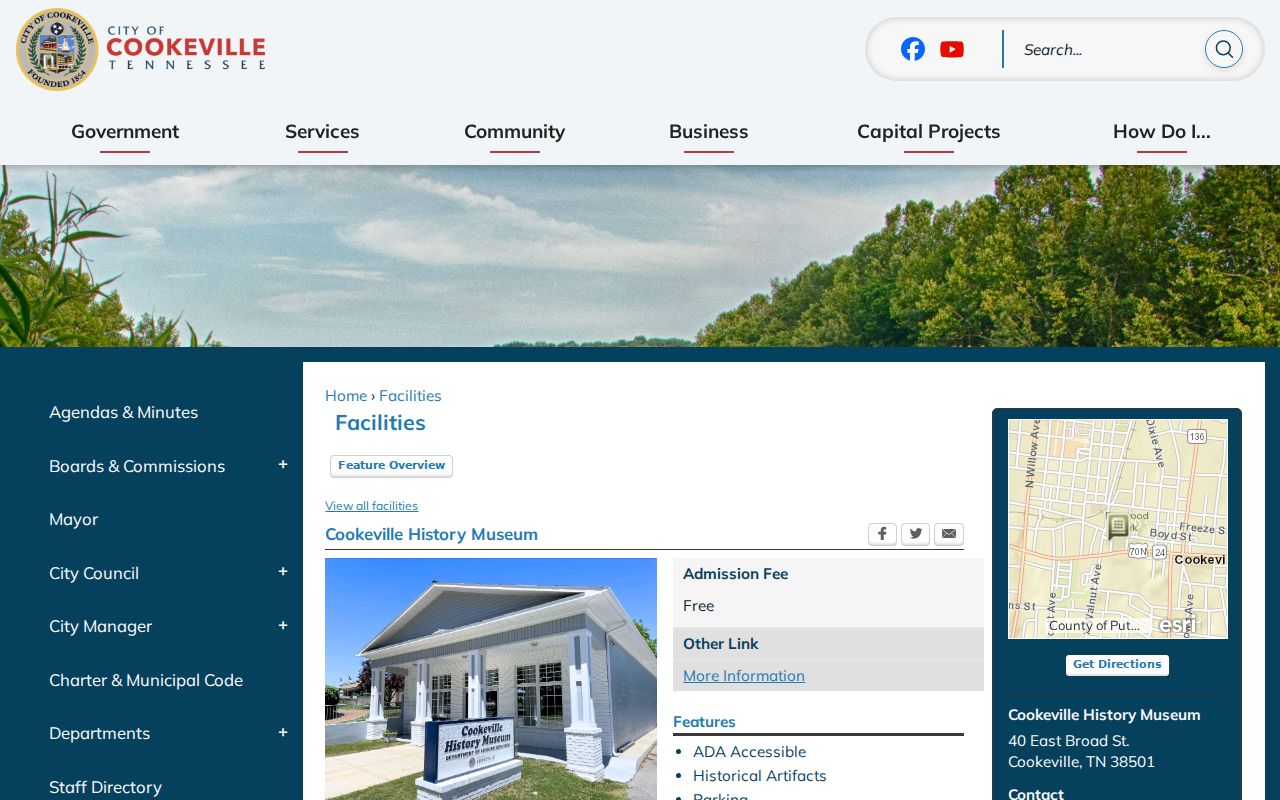
A museum image or exhibit caption works best as context for a dated directory, newspaper, census, or deed record.
Note: Preserve the collection name and date with a caption so another researcher can locate the original context.
Trace Cookeville Directory Households
Begin with the earliest verified appearance of a surname, then work outward through the next available editions. Copy the name exactly as printed, including initials and any spouse reference, and keep the street spelling intact. When an address changes, test the move with a deed, newspaper notice, census entry, or court image. When the name disappears, consider a move, a death, a changed spelling, or simple non-listing before drawing a conclusion.
- Locate the surname in one verified Cookeville volume and record the edition date, address, and every printed abbreviation.
- Check the next available shelf year with surname, initial, and spouse variants, then note any address change.
- Search the 1950 census by name, city, county, or enumeration district when the date fits the directory lead.
- Use the Putnam County FamilySearch collection for older court, estate, and civil context where a name or address trail needs another source.
- Close uncertain gaps with newspapers, cemetery material, or an archive request rather than assuming a household's status from one omission.
For a modern street-based record trail, use the Cookeville Street Directory. Historical volumes remain most useful when they are treated as dated evidence and paired with the other Cookeville collections that document the same family or address.